
Original: $1,515.42
-65%$1,515.42
$530.40The Story
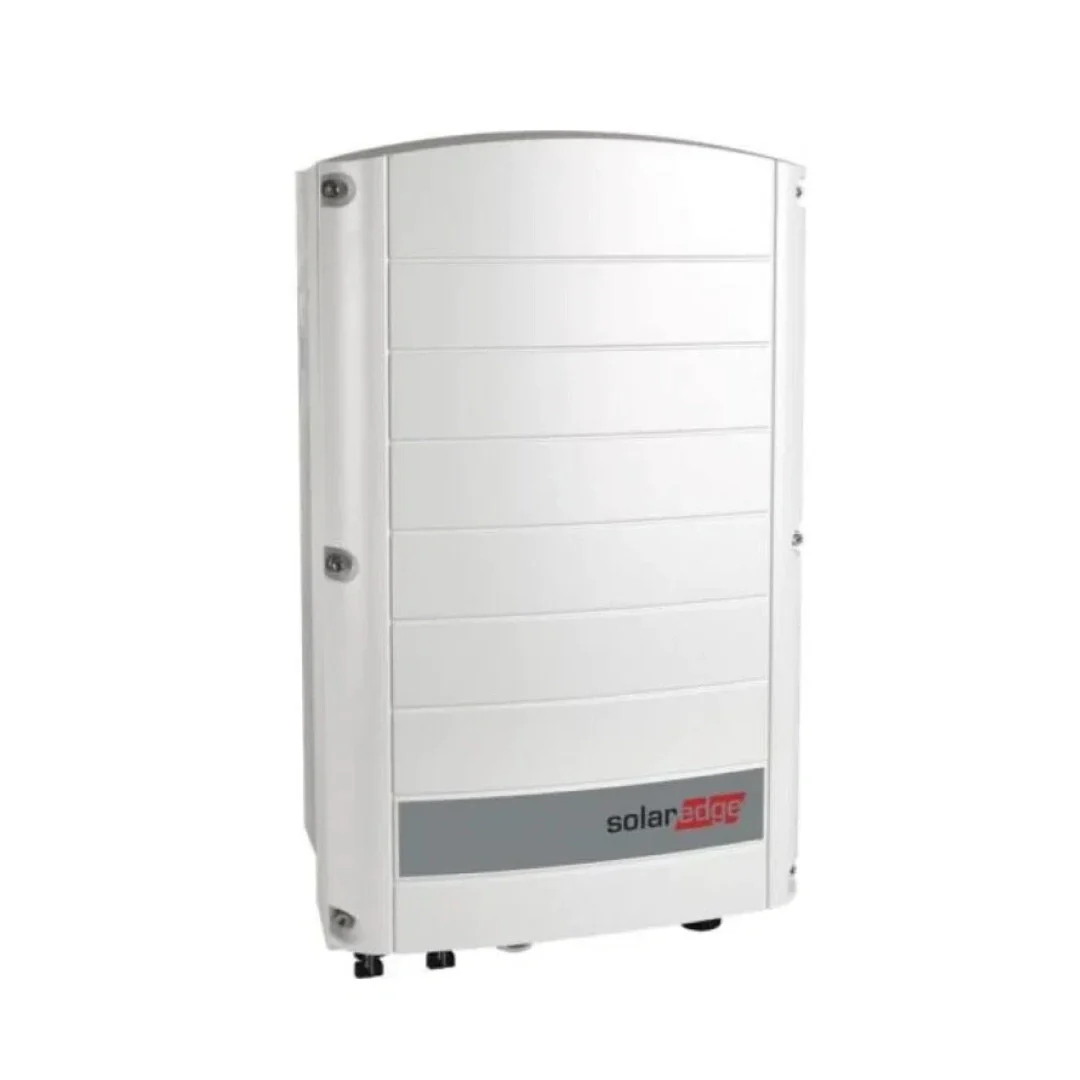
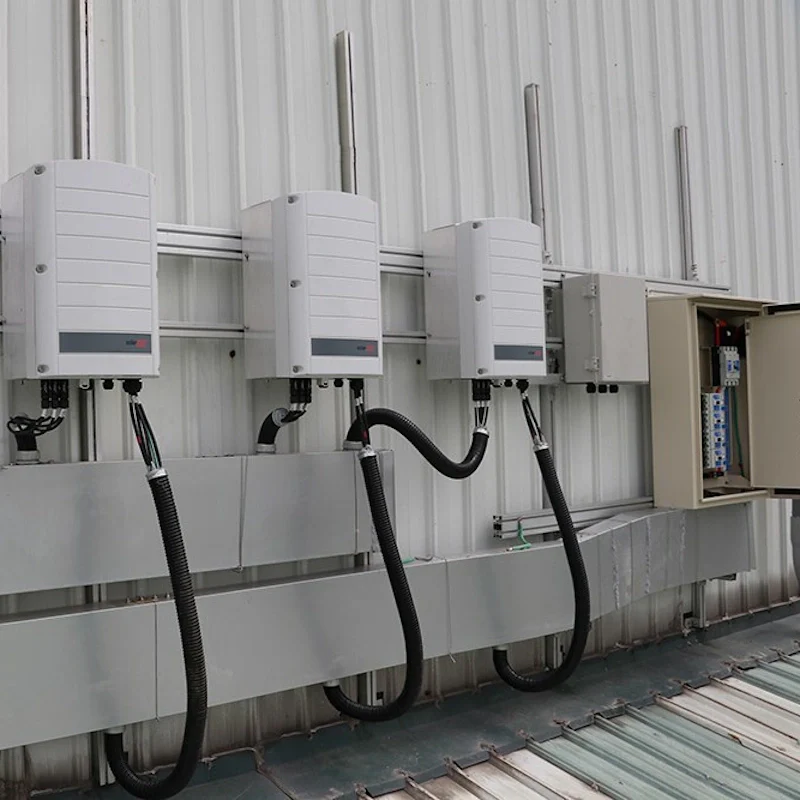
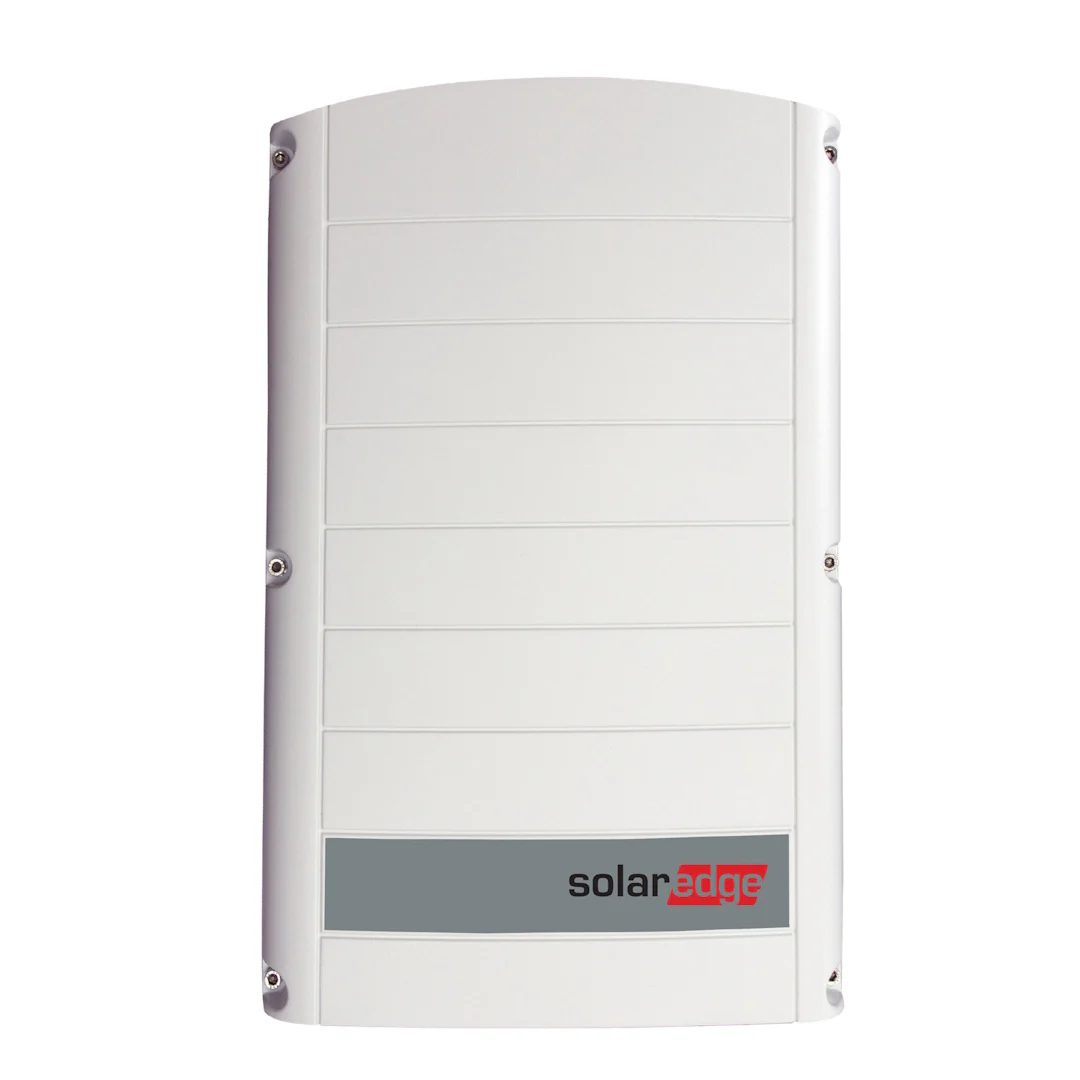
The SolarEdge Home Wave Three-Phase Inverter is available in 6 kW, 8 kW, 9 kW, and 10 kW variants, all sharing the same compact, fanless enclosure and designed exclusively to work with SolarEdge Power Optimisers on UK three-phase residential and small-commercial solar installations. Fixed-voltage DC bus technology decouples inverter operation from panel-side voltage fluctuations, enabling longer strings and consistently high efficiency regardless of shading, module count, or temperature swings. Module-level monitoring is built in as standard; commissioning is carried out entirely via the SolarEdge SetApp smartphone application over the inverter’s own Wi-Fi access point – no display, no keypad, no extra tools required. The IP65-rated enclosure suits both exterior wall mounting and indoor plant-room installation. All four ratings share the same 540 × 315 × 191 mm footprint and 16.4 kg weight, so the same bracket, cable routes, and labour methodology apply across the whole range.
These inverters must be installed by a competent, qualified solar PV engineer and notified to the Distribution Network Operator (DNO) under the appropriate generation connection standard before energisation. The 6 kW variant (2 kW per phase) typically falls under G98 and requires only a DNO notification. The 8 kW, 9 kW, and 10 kW variants may require a G99 application and DNO approval depending on total connected generation and local network conditions – confirm with the DNO before installation. In all cases, the inverter firmware must be updated via SetApp during commissioning as SolarEdge explicitly requires this step for G98/G99 compliance. Do not energise before the applicable notification or approval period has elapsed.
These are optimiser-based inverters with no built-in MPPT trackers. Solar panels cannot be connected directly – the system requires compatible SolarEdge Power Optimisers on every panel. Choose the output rating to match the system’s designed AC export capacity and DNO connection conditions. The maximum DC input power differs per variant (see spec table) and sets the ceiling for total optimiser-connected module STC power. If pairing with S650A Power Optimisers, verify the inverter was produced after WW42/2020 and that firmware is 4.22.XX or higher before commissioning.
A conventional string inverter runs MPPT across the entire string – one shaded or mismatched panel drags every other panel in that string below its peak. The Home Wave’s fixed-voltage DC bus receives a stable, pre-conditioned voltage from the Power Optimiser array, so the inverter always operates at its designed efficiency point regardless of what is happening at individual panel level. This enables longer strings, simpler wiring runs, and the ability to combine panels at different orientations or tilts on the same string – arrangements that would cause serious mismatch loss in a conventional string topology.
Key Features
No External Fan – Silent Operation
Thermal management is handled entirely by the enclosure’s heat-sink geometry, with no external fan. Noise stays below 40 dBA in continuous operation – quieter than a library – making the Home Wave suitable for mounting adjacent to a bedroom or living space. Fewer moving parts also means one fewer component to age or fail over a multi-decade service life.
SetApp Smartphone Commissioning
There is no physical display or keypad. The inverter creates a local Wi-Fi access point that the installer connects to using the SolarEdge SetApp mobile application, enabling rapid commissioning, firmware updates, fault diagnostics, and configuration changes from a phone – without specialist hardware or a laptop on site.
Built-In Module-Level Monitoring
When paired with Power Optimisers, the Home Wave relays real-time per-panel performance data to the SolarEdge monitoring platform. The owner can view live output from every module on their phone; the installer can pinpoint a faulty or soiled panel remotely rather than discovering slow yield losses months later on a quarterly report.
Smart Energy Management
Supports export limitation and SolarEdge Home Energy Management device control natively. Compatible with SolarEdge’s Home Network for integration with EV chargers, battery storage, and hot-water diverters – enabling the system to self-consume solar intelligently rather than simply exporting surplus to the grid at low rates.
Integrated Arc Fault Protection
Includes user-configurable arc fault circuit detection inside the inverter, monitoring the DC side for the early electrical signature of a developing arc fault. This provides a fire-safety layer beyond the connector-level Sense Connect protection built into S-Series Power Optimisers – a meaningful addition on any installation where cable routing or connection quality cannot be visually inspected after handover.
Uniform Footprint Across All Four Ratings
The 6 kW, 8 kW, 9 kW, and 10 kW units share the same 540 × 315 × 191 mm enclosure and 16.4 kg weight. A system initially sized at 6 kW can be upgraded to an 8 kW or 10 kW unit later using the same bracket position, cable glands, and conduit – eliminating the civil cost of a future inverter swap.
Technical Specifications
All data from SolarEdge official datasheet DS-000145-EU (revised December 2023). Scroll right on smaller screens to see all four variants.
| Parameter | SE6K 6,000 W |
SE8K 8,000 W |
SE9K 9,000 W |
SE10K 10,000 W |
|---|---|---|---|---|
| AC Output | ||||
| Rated / Max AC Power Output | 6,000 VA | 8,000 VA | 9,000 VA | 10,000 VA |
| Max Output Current (per phase) | 10 A | 13 A | 14.5 A | 16 A |
| AC Voltage (L-L / L-N nominal) | 380/220 V – 400/230 V | |||
| AC Voltage Range (L-N) | 184 – 264.5 Vac | |||
| AC Frequency | 50/60 ± 5 Hz | |||
| Grid Type | Three-Phase 3/N/PE (WYE with Neutral) | |||
| DC Input | ||||
| Max DC Power (Module STC) | 9,000 W | 12,000 W | 13,500 W | 15,000 W |
| Maximum Input Current | 10 Adc | 13.5 Adc | 15 Adc | 16.5 Adc |
| Maximum Input Voltage | 900 Vdc | |||
| Nominal DC Input Voltage | 750 Vdc | |||
| DC Inputs | 2 pairs (MC4) | |||
| Efficiency | ||||
| Maximum Inverter Efficiency | 98% | |||
| European Weighted Efficiency | 97.3% | 97.6% | 97.5% | 97.6% |
| Nighttime Power Consumption | <2.5 W | |||
| Installation & Mechanical | ||||
| Dimensions (H × W × D) | 540 × 315 × 191 mm | |||
| Weight | 16.4 kg | |||
| AC Cable Gland (diameter) | 15 – 21 mm | |||
| Operating Temperature Range | –40 to +60 °C | |||
| Cooling | No external fan | |||
| Noise Level | <40 dBA | |||
| Protection Rating | IP65 (outdoor and indoor) | |||
| Mounting Bracket | Provided | |||
| Communication & Standards | ||||
| Communication Interfaces | RS485, Ethernet; Wi-Fi (optional), Cellular (optional) | |||
| Commissioning | SolarEdge SetApp via built-in Wi-Fi access point | |||
| Safety Standard | IEC 62109-1/2 | |||
| UK Grid Standards | G98 Type A, G98 NI Type A, G100 | |||
| EMC | IEC 61000-6-2 / -6-3 / -3-11 / -3-12, EN 55011 | |||
| RoHS | Compliant | |||
| Manufacturer Warranty | 12 years standard (25 years available) | |||
Data per SolarEdge datasheet DS-000145-EU (December 2023). Power derating applies above +60 °C; refer to the SolarEdge Temperature Derating technical note for derating curves. Applicable part numbers: SE6K-RW0TEBEN4, SE8K-RW0TEBEN4, SE9K-RW0TEBEN4, SE10K-RW0TEBEN4. Certifications by country may vary; see the SolarEdge Knowledge Center for current certification status.
Frequently Asked Questions
Can panels be connected directly without Power Optimisers?
Which output rating should I choose?
Does the 8 kW variant need G98 or G99 notification?
Is it compatible with the SolarEdge S650A Power Optimiser?
How is the inverter commissioned with no display?
Can it be wall-mounted outside, and how noisy is it?
Details & Craftsmanship
Every detail has been carefully considered to bring you the perfect product.
Details & Craftsmanship
Every detail has been carefully considered to bring you the perfect product.
Description
The SolarEdge Home Wave Three-Phase Inverter is available in 6 kW, 8 kW, 9 kW, and 10 kW variants, all sharing the same compact, fanless enclosure and designed exclusively to work with SolarEdge Power Optimisers on UK three-phase residential and small-commercial solar installations. Fixed-voltage DC bus technology decouples inverter operation from panel-side voltage fluctuations, enabling longer strings and consistently high efficiency regardless of shading, module count, or temperature swings. Module-level monitoring is built in as standard; commissioning is carried out entirely via the SolarEdge SetApp smartphone application over the inverter’s own Wi-Fi access point – no display, no keypad, no extra tools required. The IP65-rated enclosure suits both exterior wall mounting and indoor plant-room installation. All four ratings share the same 540 × 315 × 191 mm footprint and 16.4 kg weight, so the same bracket, cable routes, and labour methodology apply across the whole range.
These inverters must be installed by a competent, qualified solar PV engineer and notified to the Distribution Network Operator (DNO) under the appropriate generation connection standard before energisation. The 6 kW variant (2 kW per phase) typically falls under G98 and requires only a DNO notification. The 8 kW, 9 kW, and 10 kW variants may require a G99 application and DNO approval depending on total connected generation and local network conditions – confirm with the DNO before installation. In all cases, the inverter firmware must be updated via SetApp during commissioning as SolarEdge explicitly requires this step for G98/G99 compliance. Do not energise before the applicable notification or approval period has elapsed.
These are optimiser-based inverters with no built-in MPPT trackers. Solar panels cannot be connected directly – the system requires compatible SolarEdge Power Optimisers on every panel. Choose the output rating to match the system’s designed AC export capacity and DNO connection conditions. The maximum DC input power differs per variant (see spec table) and sets the ceiling for total optimiser-connected module STC power. If pairing with S650A Power Optimisers, verify the inverter was produced after WW42/2020 and that firmware is 4.22.XX or higher before commissioning.
A conventional string inverter runs MPPT across the entire string – one shaded or mismatched panel drags every other panel in that string below its peak. The Home Wave’s fixed-voltage DC bus receives a stable, pre-conditioned voltage from the Power Optimiser array, so the inverter always operates at its designed efficiency point regardless of what is happening at individual panel level. This enables longer strings, simpler wiring runs, and the ability to combine panels at different orientations or tilts on the same string – arrangements that would cause serious mismatch loss in a conventional string topology.
Key Features
No External Fan – Silent Operation
Thermal management is handled entirely by the enclosure’s heat-sink geometry, with no external fan. Noise stays below 40 dBA in continuous operation – quieter than a library – making the Home Wave suitable for mounting adjacent to a bedroom or living space. Fewer moving parts also means one fewer component to age or fail over a multi-decade service life.
SetApp Smartphone Commissioning
There is no physical display or keypad. The inverter creates a local Wi-Fi access point that the installer connects to using the SolarEdge SetApp mobile application, enabling rapid commissioning, firmware updates, fault diagnostics, and configuration changes from a phone – without specialist hardware or a laptop on site.
Built-In Module-Level Monitoring
When paired with Power Optimisers, the Home Wave relays real-time per-panel performance data to the SolarEdge monitoring platform. The owner can view live output from every module on their phone; the installer can pinpoint a faulty or soiled panel remotely rather than discovering slow yield losses months later on a quarterly report.
Smart Energy Management
Supports export limitation and SolarEdge Home Energy Management device control natively. Compatible with SolarEdge’s Home Network for integration with EV chargers, battery storage, and hot-water diverters – enabling the system to self-consume solar intelligently rather than simply exporting surplus to the grid at low rates.
Integrated Arc Fault Protection
Includes user-configurable arc fault circuit detection inside the inverter, monitoring the DC side for the early electrical signature of a developing arc fault. This provides a fire-safety layer beyond the connector-level Sense Connect protection built into S-Series Power Optimisers – a meaningful addition on any installation where cable routing or connection quality cannot be visually inspected after handover.
Uniform Footprint Across All Four Ratings
The 6 kW, 8 kW, 9 kW, and 10 kW units share the same 540 × 315 × 191 mm enclosure and 16.4 kg weight. A system initially sized at 6 kW can be upgraded to an 8 kW or 10 kW unit later using the same bracket position, cable glands, and conduit – eliminating the civil cost of a future inverter swap.
Technical Specifications
All data from SolarEdge official datasheet DS-000145-EU (revised December 2023). Scroll right on smaller screens to see all four variants.
| Parameter | SE6K 6,000 W |
SE8K 8,000 W |
SE9K 9,000 W |
SE10K 10,000 W |
|---|---|---|---|---|
| AC Output | ||||
| Rated / Max AC Power Output | 6,000 VA | 8,000 VA | 9,000 VA | 10,000 VA |
| Max Output Current (per phase) | 10 A | 13 A | 14.5 A | 16 A |
| AC Voltage (L-L / L-N nominal) | 380/220 V – 400/230 V | |||
| AC Voltage Range (L-N) | 184 – 264.5 Vac | |||
| AC Frequency | 50/60 ± 5 Hz | |||
| Grid Type | Three-Phase 3/N/PE (WYE with Neutral) | |||
| DC Input | ||||
| Max DC Power (Module STC) | 9,000 W | 12,000 W | 13,500 W | 15,000 W |
| Maximum Input Current | 10 Adc | 13.5 Adc | 15 Adc | 16.5 Adc |
| Maximum Input Voltage | 900 Vdc | |||
| Nominal DC Input Voltage | 750 Vdc | |||
| DC Inputs | 2 pairs (MC4) | |||
| Efficiency | ||||
| Maximum Inverter Efficiency | 98% | |||
| European Weighted Efficiency | 97.3% | 97.6% | 97.5% | 97.6% |
| Nighttime Power Consumption | <2.5 W | |||
| Installation & Mechanical | ||||
| Dimensions (H × W × D) | 540 × 315 × 191 mm | |||
| Weight | 16.4 kg | |||
| AC Cable Gland (diameter) | 15 – 21 mm | |||
| Operating Temperature Range | –40 to +60 °C | |||
| Cooling | No external fan | |||
| Noise Level | <40 dBA | |||
| Protection Rating | IP65 (outdoor and indoor) | |||
| Mounting Bracket | Provided | |||
| Communication & Standards | ||||
| Communication Interfaces | RS485, Ethernet; Wi-Fi (optional), Cellular (optional) | |||
| Commissioning | SolarEdge SetApp via built-in Wi-Fi access point | |||
| Safety Standard | IEC 62109-1/2 | |||
| UK Grid Standards | G98 Type A, G98 NI Type A, G100 | |||
| EMC | IEC 61000-6-2 / -6-3 / -3-11 / -3-12, EN 55011 | |||
| RoHS | Compliant | |||
| Manufacturer Warranty | 12 years standard (25 years available) | |||
Data per SolarEdge datasheet DS-000145-EU (December 2023). Power derating applies above +60 °C; refer to the SolarEdge Temperature Derating technical note for derating curves. Applicable part numbers: SE6K-RW0TEBEN4, SE8K-RW0TEBEN4, SE9K-RW0TEBEN4, SE10K-RW0TEBEN4. Certifications by country may vary; see the SolarEdge Knowledge Center for current certification status.


